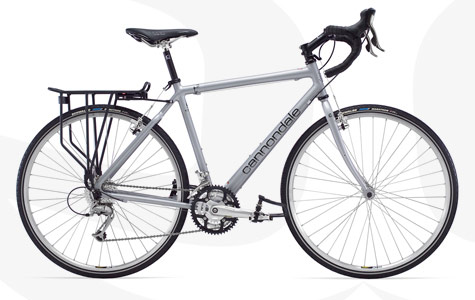
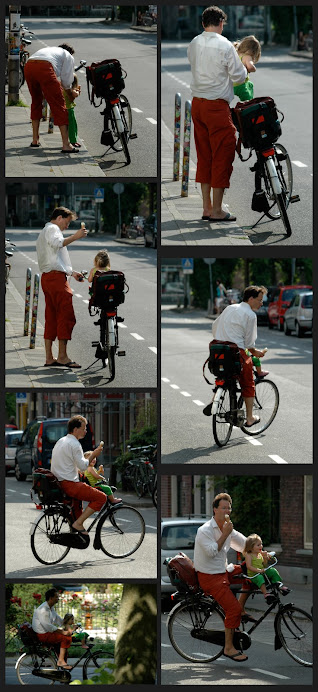
This guy finds an electric bike an occasion to dress up for. Me, I find them pretty wack.
Showing posts with label Opinion. Show all posts
Electric bikes and safe cycling

Electric bikes have not been popular in the U.S. Apparently the new electric bikes might appeal to cyclists, (they don’t appeal to me personally) but the chief market is car drivers: "Some people buy the bike to commute, other people purchase the bike to use as a replacement for short automobile trips," Paul Vlahos (vice-president of sales for a US company) enthused imaginatively.
The newest electric bikes from Giant, EcoBike, Currie Technologies and Ultra Motor, among others, can deliver around 500 watts of power. The reporter lapped up the praise of these bikes and said as requested ‘you zoom from a standing start, zip up hills or hustle along the street’. It weight 33 kg so this electric bike is two or three times the weight of an average bicycle. The battery capacity is 20 miles but there is a (heavy) option to put another detachable battery on the rear rack, doubling that range. The bike has seven gears for normal pedalling, using a standard Shimano derailleur system.
The price: US$2,699 (NZ$3799),
The reporter compares the price to a high-end racing bike and points out that this is less expensive than a standard motor scooter.
This kind of vehicle is considered a "light electric vehicle," and therefore is a bicycle under US transport regulations. This means it is legal to take this motor vehicle the same places as cyclists are allowed, even if you don’t have a motorbike or drivers licence. It can reach speeds of up to 30 kilometers per hour on the flat.
If we are trying to encourage cycling through safer cycle paths- is it safe or sensible to allow these motor vehicles on cycle ways?
For the full promo click here.
Cycling space and cycling at pace
Three ways to ride: The courier way, Taking the space and Cruising at your own pace
Riding at your own pace on a busy single road or fast multi lane road is more difficult than it sounds. What I mean by this is that it is hard to enjoy riding in traffic at a speed which suits you.
Some of the many reasons part-time cyclists don’t enjoy riding on the road are that traffic passes too close and the traffic is moving much faster than the cyclist. This feels scary and your safety often feels (and is) compromised. Feeling scared is a justifiable response given the speed of the cars and the ability of their drivers to A) avoid you, and B) give you enough space and time to ride freely.
One way to deal with this problem is when possible (downhill inclines, flat stretches between traffic lights, riding with a tail wind, through winding sections, in slow moving traffic) to ride as fast as the cars. However this often relies on your ability to power along in top gear and your split second skills in making sudden moves based on the failure of drivers to respect your existence / right as a vehicle to a lane or even realize that you are there and moving that quickly. This is the cycle-courier way.
The alternative is to cruise along avoiding trouble. This viable, seemingly safer method, allows for a more relaxing ride. This is because it is at your own pace. A more languid and chillaxed pace also frees attention to take in the surrounding area, other hot cycles, find places you are looking for, and generally experience the world from two wheels. This is a fine method until you reach busy areas like a bus stop or approach intersections where cars can intimidate and push you to the side of the road or out into fast moving flows of traffic.
At a gentle pace you will likely be close in to the kerb / pavement. In this position there are times where motor vehicles will compromise your safety. These are the times I like to accelerate and move into a more visible position in a lane or ‘take the lane’ by being right in the middle so no cars can force me to the edge of the road and I can proceed without being impeded. If riders don’t do this they are often blocked or put in an unsafe position.
Your safety as a cyclist is usually compromised when drivers accelerate past you and then cut you off by braking directly in front of you as they make left and right turns where they could have waited patiently behind until you clear an intersection; by coming too close behind you; or by pulling out of a side street so far that you must change your course or ruin your hard earned momentum.
As your fitness improves you can use a combination of the courier way, taking the space and the cruising at your own pace approaches to road cycling. My own approach in Seoul is to ride as quickly as it is safe through busy urban areas or when cycling on a large road with fast aggressive buses and cars with the aim of safely arriving somewhere nicer to ride. Then I can cruise at my own pace.
I like to ride with approximately 2 metres of space between me and a kerb. In my hometown in Wellington where there are a lot of narrow roads this is impossible. You must either take the lane or be squeezed in vulnerably next to parked cars / the kerb.
Cycling in Asia is a different story however. That space between the bike and the kerb is vital. I’ve found cycling in China and Seoul similar in that there is a lot of activity going on near the kerb. The density of the population in large Asian cities means people requre this crucial space to function, but it is also an area where cyclists are trying to make their way through the traffic maelstrom too. Pedestrians, vendors, taxis, parked cars, scooters, motorbikes, and cars edging out into my space all flirt with danger and try to present danger to me on a platter in that area, and 2 meters is the space I need to make rapid adjustments when my safety is compromised. When possible on multi-lane roads I will dominate a lane at pace to gain the space I need.
Riding at your own pace on a busy single road or fast multi lane road is more difficult than it sounds. What I mean by this is that it is hard to enjoy riding in traffic at a speed which suits you.
Some of the many reasons part-time cyclists don’t enjoy riding on the road are that traffic passes too close and the traffic is moving much faster than the cyclist. This feels scary and your safety often feels (and is) compromised. Feeling scared is a justifiable response given the speed of the cars and the ability of their drivers to A) avoid you, and B) give you enough space and time to ride freely.
One way to deal with this problem is when possible (downhill inclines, flat stretches between traffic lights, riding with a tail wind, through winding sections, in slow moving traffic) to ride as fast as the cars. However this often relies on your ability to power along in top gear and your split second skills in making sudden moves based on the failure of drivers to respect your existence / right as a vehicle to a lane or even realize that you are there and moving that quickly. This is the cycle-courier way.
The alternative is to cruise along avoiding trouble. This viable, seemingly safer method, allows for a more relaxing ride. This is because it is at your own pace. A more languid and chillaxed pace also frees attention to take in the surrounding area, other hot cycles, find places you are looking for, and generally experience the world from two wheels. This is a fine method until you reach busy areas like a bus stop or approach intersections where cars can intimidate and push you to the side of the road or out into fast moving flows of traffic.
At a gentle pace you will likely be close in to the kerb / pavement. In this position there are times where motor vehicles will compromise your safety. These are the times I like to accelerate and move into a more visible position in a lane or ‘take the lane’ by being right in the middle so no cars can force me to the edge of the road and I can proceed without being impeded. If riders don’t do this they are often blocked or put in an unsafe position.
Your safety as a cyclist is usually compromised when drivers accelerate past you and then cut you off by braking directly in front of you as they make left and right turns where they could have waited patiently behind until you clear an intersection; by coming too close behind you; or by pulling out of a side street so far that you must change your course or ruin your hard earned momentum.
As your fitness improves you can use a combination of the courier way, taking the space and the cruising at your own pace approaches to road cycling. My own approach in Seoul is to ride as quickly as it is safe through busy urban areas or when cycling on a large road with fast aggressive buses and cars with the aim of safely arriving somewhere nicer to ride. Then I can cruise at my own pace.
I like to ride with approximately 2 metres of space between me and a kerb. In my hometown in Wellington where there are a lot of narrow roads this is impossible. You must either take the lane or be squeezed in vulnerably next to parked cars / the kerb.
Cycling in Asia is a different story however. That space between the bike and the kerb is vital. I’ve found cycling in China and Seoul similar in that there is a lot of activity going on near the kerb. The density of the population in large Asian cities means people requre this crucial space to function, but it is also an area where cyclists are trying to make their way through the traffic maelstrom too. Pedestrians, vendors, taxis, parked cars, scooters, motorbikes, and cars edging out into my space all flirt with danger and try to present danger to me on a platter in that area, and 2 meters is the space I need to make rapid adjustments when my safety is compromised. When possible on multi-lane roads I will dominate a lane at pace to gain the space I need.
Single speed cycling
It's obviously nothing compared to the above but I've found a seriously nice place to free wheel around. I've been going every possible evening around dusk to Kyunghee University. By using the smooth tarmac you can fly across the campus' varying inclines and ride freely around carving curves and aiming for inertia. Magic. Maybe I finally understand why single speed bikes can be fun. The perfect speed for the perfect arc...
Seoul Cycle Chic: riding in the right gear (contd.)
I think this quote goes some way towards summarising:
"The idea that you do not need any special accessories for chic cycling is sad and boring to many Americans. They don't want to open their closets, they want a new reason to go shopping! Pushing the anti-consumerism aspect of cycling might actually reduce the rising public enthusiasm for the activity."
Lovely Bicycle.'Can we ride away from marketing'? 6.6.09 (see links).
"The idea that you do not need any special accessories for chic cycling is sad and boring to many Americans. They don't want to open their closets, they want a new reason to go shopping! Pushing the anti-consumerism aspect of cycling might actually reduce the rising public enthusiasm for the activity."
Lovely Bicycle.'Can we ride away from marketing'? 6.6.09 (see links).
Cycling in the right gear: cycle chic.
Cycling is hot in Seoul right now. But fads come and go here. Remember board game cafes?
Some riders around Seoul choose style at the expense of common sense. As mentioned below riding distances are often short (to /from campus or down to the cafe) so practical bikes and clothes are easily expendable commodites.
Similarly, style is all in the 'cycle chic' movement which appears to be bringing more chicks onto the roads/footpaths and cycleways to ride (or at least be photographed). The fashion industry infiltrating the latest green trend? Andre Kim a major domestic fashion designer has designed the most recent wave of small bikes in Korea.
Things I like in the seriously playful Copenhagen Cycle Chic manifesto:
"I embrace my responsibility to contribute visually to a more aesthetically pleasing urban landscape. I am aware that my mere prescence in said urban landscape will inspire others without me being labelled as a 'bicycle activist'.
I will ride with grace, elegance and dignity.
I will choose a bicycle that reflects my personality and style. I will, however, regard my bicycle as transport and as a mere supplement to my own personal style. Allowing my bike to upstage me is unacceptable.
I will accessorize in accordance with the standards of a bicycle culture and acquire, where possible, a chain guard, kickstand, skirt guard, fenders, bell and basket.
I will respect the traffic laws."
Things I am highly dubious about in the seriously playful Copenhagen Cycle Chic manifesto:
"I will endeavour to ensure that the total value of my clothes always exceeds that of my bicycle."
What if my clothes are all second hand- does this mean I have to ride a bike that is a second hand shitter? What's wrong with a cheap suit on a nice bike? Sometimes it's nice not to be the centre of attention.
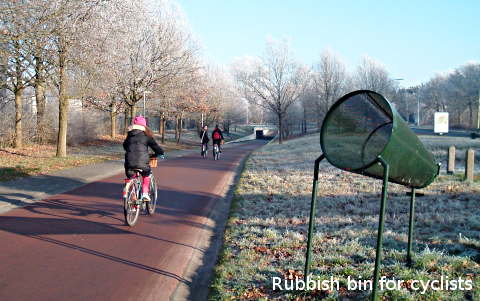
However the idea of picking up a solid cheap bike and riding the traffic free cycle path into town along a river for a night out is grand. Oh for that world. This blog favours a balance of style and practicality.
Pun in the headline was from 'Cycling in the right gear for national bike week', an article from the Telegraph by Harriet Quick June 10 2009 that featured chic ladies in new clothes riding bikes in national bike week UK. For the full cycle chic manifesto see the link Bike by the Sea.
Cycle Chic
check this article :
Some riders around Seoul choose style at the expense of common sense. As mentioned below riding distances are often short (to /from campus or down to the cafe) so practical bikes and clothes are easily expendable commodites.
Similarly, style is all in the 'cycle chic' movement which appears to be bringing more chicks onto the roads/footpaths and cycleways to ride (or at least be photographed). The fashion industry infiltrating the latest green trend? Andre Kim a major domestic fashion designer has designed the most recent wave of small bikes in Korea.
Things I like in the seriously playful Copenhagen Cycle Chic manifesto:
"I embrace my responsibility to contribute visually to a more aesthetically pleasing urban landscape. I am aware that my mere prescence in said urban landscape will inspire others without me being labelled as a 'bicycle activist'.
I will ride with grace, elegance and dignity.
I will choose a bicycle that reflects my personality and style. I will, however, regard my bicycle as transport and as a mere supplement to my own personal style. Allowing my bike to upstage me is unacceptable.
I will accessorize in accordance with the standards of a bicycle culture and acquire, where possible, a chain guard, kickstand, skirt guard, fenders, bell and basket.
I will respect the traffic laws."
Things I am highly dubious about in the seriously playful Copenhagen Cycle Chic manifesto:
"I will endeavour to ensure that the total value of my clothes always exceeds that of my bicycle."
What if my clothes are all second hand- does this mean I have to ride a bike that is a second hand shitter? What's wrong with a cheap suit on a nice bike? Sometimes it's nice not to be the centre of attention.
However the idea of picking up a solid cheap bike and riding the traffic free cycle path into town along a river for a night out is grand. Oh for that world. This blog favours a balance of style and practicality.
Pun in the headline was from 'Cycling in the right gear for national bike week', an article from the Telegraph by Harriet Quick June 10 2009 that featured chic ladies in new clothes riding bikes in national bike week UK. For the full cycle chic manifesto see the link Bike by the Sea.
Cycle Chic
check this article :
Cycling in Seoul
History
At present commuting on the road in Seoul is abysmal due to a lack of cycle lanes and space, a dominant car culture, a lack of education about cyclists and some pretty dangerous driving by cycle ignorant buses and motorists. For example cars and buses often underestimate the speed of oncoming cyclists and as a result cyclists are put in danger because motor vehicles move in front of cyclists.
In Seoul cycles are mainly a form of transport within local areas (for students to and from campus, for older people to the shops, and as small trade vehicles in and around major markets), but cars and buses dominate the roads.
Riding greater distances or even off-road for pleasure, exercising, or training for cycle races is sadly, mostly limited to river cycle paths, which up until now have been difficult to access and smoggy as they were developed as afterthoughts alongside major arterial freeways with masses of motor vehicles. Seoul has a lot of streams and rivers, which descend from the Bukhan National park directly to the North of the city.
In the country’s rush to develop its capital into a modern industrial city many of these streams and rivers became concrete culverts full of filthy industrial run-off and chemical and human waste. The Han's surrounding landscape, a major river that runs East to West through Seoul are also in a sad state. It is where all the abovementioned streams end up and as well as being polluted, is hard to access.
"Historically modernization and industrialization always takes place by water...Seoul has a great resource (in the Han) but the relationship between the city and the river has become distorted" Lee Jewon.
Lee is the director of a project to restore the Han. According to Lee, products of Seoul's rapid industrial growth are manifested in concrete barriers along the river, apartments and roads, which block access. Lee also mentions that the Han lacks waterfronts for people to enjoy, as neighbourhoods face inwards away from the river. A good example of this is the way many apartment blocks which border on massive roads alongside the Han are fenced in with noise reducing walls.
The reappropriation of these streams and rivers as greener public parks and cycle ways is the method local government has seized upon to find space for recreation and better alternative transportation.
Future
The Korea Times reports that the Seoul Metropolitan Government plans to construct bicycle-only lanes totalling 207 kilometres by 2012 in an effort to ‘meet growing demands for a safer environment for riders’:
'Move over, motorists. Cyclists are getting some of your space'.
"A city cannot effectively cope with global warming issues and traffic congestion if people commute only by car…We will develop Seoul into a city where citizens can commute by bicycle." Seoul Mayor Oh Se-hoon Korea of course wants to sell bikes as well as make the city a better place to ride. Would anything else lead to change in this ultra capitalist capital? If you have to reduce industrial productivity in order to cut Co2 emissions, best to create a new market and a new way to make money eh?
Ben Jackson in Seoul Selection declared that “the bicycle is no longer an inferior mode of transport”. Sexify word press lists at least 10 cycling related benefits with this being the best:
Bikes are safer : 'Cars kill people. Bicycles don’t. (I suppose in theory they could – if you dropped one on someone from really high up perhaps.) Moreover, loads of real-world evidence shows that the more people cycle, the lower the risk of injury to people on bikes.'
“A motorist is less likely to collide with a person walking and bicycling if more people walk or bicycle. Policies that increase the numbers of people walking and bicycling appear to be an effective route to improving the safety of people walking and bicycling.” – British Medical Journal. It seems another way is building cycle paths that allow cyclists to commute safely.
David Hembrow lists some important criteria for cycle paths further down this page.
Another effective way to access pleasant river cycle ways would be to allow bikes on the subway. There is some evidence (Korea Herald 29.6.09) to show this idea is currently being debated: Park Si Soo reported in the Korea Times that a city official said "From October, a total of 16 trains, two from each line, will run with two bike-only cars,'' ( On Sunday only)"It will be available on weekdays from April next year...If the plan is confirmed, stations in Seoul will widen their entrances and install bike-only lifts linking gateways and platforms,'' the official said.
Best places to ride
Smooth
One stretch already established is the Jungangchon stream which runs North –South from Uijeongbu to the Han. It is hemmed in by major roads, but the surface is in good condition and provides one point of access into the city via the Eastern most part of the Cheongye Chon tributary. For more information regarding these streams see the wiki link on the right side of this page.
Rough
Off road enthusiasts are encouraged to head for Namhansanseong South East of Seoul. This area is yet to be experienced by the author, though plans are in place. According to Kevin Silverson as cited in Hay (2009), this is the premier mountain biking area close to Seoul. See Mountain Bike Seoul in the links section for more info.
References
Hay, Rob 'The Filthies' Groove Korea Issue 31 May '09 p.54
Jackson, Ben ‘Riding in Style and Comfort (ii)’ Seoul Selection July 2009 p.18.
Kim Tae-Jong ‘Going “Road-Diet” for Bike Riding Oct. 23 2008 The Korea Times accessed 7.10.09.
Koehler, Robert quoting Lee Jewon in'Bring the River Back to the People' Seoul Selection July 2009 p.56-57.
Park Si-soo 'Bicycle-Only Subway Cars Planned' The Korea Times 06-28-09 accessed 7.13.09
Sexify Word Press ' Benefits of Bikes for towns and local government' accessed 7.10.09
Yoo Jee-ho 'City to pave miles of new bike paths'. The Joongang Daily May 15, 2009.
Where do you like to ride? Write in and let us know.
What do you ride? Send us a photo of your bicycle.
cycleseoul@gmail.com
At present commuting on the road in Seoul is abysmal due to a lack of cycle lanes and space, a dominant car culture, a lack of education about cyclists and some pretty dangerous driving by cycle ignorant buses and motorists. For example cars and buses often underestimate the speed of oncoming cyclists and as a result cyclists are put in danger because motor vehicles move in front of cyclists.
In Seoul cycles are mainly a form of transport within local areas (for students to and from campus, for older people to the shops, and as small trade vehicles in and around major markets), but cars and buses dominate the roads.
Riding greater distances or even off-road for pleasure, exercising, or training for cycle races is sadly, mostly limited to river cycle paths, which up until now have been difficult to access and smoggy as they were developed as afterthoughts alongside major arterial freeways with masses of motor vehicles. Seoul has a lot of streams and rivers, which descend from the Bukhan National park directly to the North of the city.
In the country’s rush to develop its capital into a modern industrial city many of these streams and rivers became concrete culverts full of filthy industrial run-off and chemical and human waste. The Han's surrounding landscape, a major river that runs East to West through Seoul are also in a sad state. It is where all the abovementioned streams end up and as well as being polluted, is hard to access.
"Historically modernization and industrialization always takes place by water...Seoul has a great resource (in the Han) but the relationship between the city and the river has become distorted" Lee Jewon.
Lee is the director of a project to restore the Han. According to Lee, products of Seoul's rapid industrial growth are manifested in concrete barriers along the river, apartments and roads, which block access. Lee also mentions that the Han lacks waterfronts for people to enjoy, as neighbourhoods face inwards away from the river. A good example of this is the way many apartment blocks which border on massive roads alongside the Han are fenced in with noise reducing walls.
The reappropriation of these streams and rivers as greener public parks and cycle ways is the method local government has seized upon to find space for recreation and better alternative transportation.
Future
The Korea Times reports that the Seoul Metropolitan Government plans to construct bicycle-only lanes totalling 207 kilometres by 2012 in an effort to ‘meet growing demands for a safer environment for riders’:
'Move over, motorists. Cyclists are getting some of your space'."A city cannot effectively cope with global warming issues and traffic congestion if people commute only by car…We will develop Seoul into a city where citizens can commute by bicycle." Seoul Mayor Oh Se-hoon Korea of course wants to sell bikes as well as make the city a better place to ride. Would anything else lead to change in this ultra capitalist capital? If you have to reduce industrial productivity in order to cut Co2 emissions, best to create a new market and a new way to make money eh?
Ben Jackson in Seoul Selection declared that “the bicycle is no longer an inferior mode of transport”. Sexify word press lists at least 10 cycling related benefits with this being the best:
Bikes are safer : 'Cars kill people. Bicycles don’t. (I suppose in theory they could – if you dropped one on someone from really high up perhaps.) Moreover, loads of real-world evidence shows that the more people cycle, the lower the risk of injury to people on bikes.'
“A motorist is less likely to collide with a person walking and bicycling if more people walk or bicycle. Policies that increase the numbers of people walking and bicycling appear to be an effective route to improving the safety of people walking and bicycling.” – British Medical Journal. It seems another way is building cycle paths that allow cyclists to commute safely.
David Hembrow lists some important criteria for cycle paths further down this page.
Another effective way to access pleasant river cycle ways would be to allow bikes on the subway. There is some evidence (Korea Herald 29.6.09) to show this idea is currently being debated: Park Si Soo reported in the Korea Times that a city official said "From October, a total of 16 trains, two from each line, will run with two bike-only cars,'' ( On Sunday only)"It will be available on weekdays from April next year...If the plan is confirmed, stations in Seoul will widen their entrances and install bike-only lifts linking gateways and platforms,'' the official said.
Best places to ride
Smooth
One stretch already established is the Jungangchon stream which runs North –South from Uijeongbu to the Han. It is hemmed in by major roads, but the surface is in good condition and provides one point of access into the city via the Eastern most part of the Cheongye Chon tributary. For more information regarding these streams see the wiki link on the right side of this page.
Rough
Off road enthusiasts are encouraged to head for Namhansanseong South East of Seoul. This area is yet to be experienced by the author, though plans are in place. According to Kevin Silverson as cited in Hay (2009), this is the premier mountain biking area close to Seoul. See Mountain Bike Seoul in the links section for more info.
References
Hay, Rob 'The Filthies' Groove Korea Issue 31 May '09 p.54
Jackson, Ben ‘Riding in Style and Comfort (ii)’ Seoul Selection July 2009 p.18.
Kim Tae-Jong ‘Going “Road-Diet” for Bike Riding Oct. 23 2008 The Korea Times accessed 7.10.09.
Koehler, Robert quoting Lee Jewon in'Bring the River Back to the People' Seoul Selection July 2009 p.56-57.
Park Si-soo 'Bicycle-Only Subway Cars Planned' The Korea Times 06-28-09 accessed 7.13.09
Sexify Word Press ' Benefits of Bikes for towns and local government' accessed 7.10.09
Yoo Jee-ho 'City to pave miles of new bike paths'. The Joongang Daily May 15, 2009.
Where do you like to ride? Write in and let us know.
What do you ride? Send us a photo of your bicycle.
cycleseoul@gmail.com
Subscribe to:
Posts (Atom)